20+ AI Project Ideas for Students
20+ AI Student Projects Ideas: From Beginner to Advance

The artificial intelligence (AI) is not just a topic in the research laboratories or large corporations anymore it is a pre-requisite to becoming a technologicist in the future. The AI student projects offer a very effective practical method of learning the fundamentals of AI and applying it to the practical issue of the world. Projects assist in moving technology between theory and practice, whether it is a simple rule-based application or a complex machine learning and deep learning application.
Through the projects that students conduct on AI, they are not only able to enhance their technical skills but to also acquire critical thinking, problem-solving, and analytical skills, which are highly sought after skills in the current job market. Academic portfolios, resumes and hacademy submissions are also great additions to these projects.
Regardless of your level of expertise and whether you are learning the basics of AI or are an experienced learner, the selected collection of 20+ AI project ideas will lead you through the various levels of difficulty step-by-step. All concepts will assist you in learning, trying, and developing an increased level of confidence in artificial intelligence.
Key Takeaways:
Some good ideas to create AI projects and start as a beginner.
Machine learning and data analysis intermediate projects.
Elaborate AI projects in the fields of deep learning, NLP, and computer vision.
Real-life concepts that can be used in college work, final year projects and self study.
We should explore these ideas of AI projects and begin to create intelligent solutions.
Introduction to AI Projects
/im
One of the most productive methods of students to get to know AI, not only by reading textbooks and listening to lectures, is the Artificial Intelligence projects. As much as theoretical knowledge is used to explain how algorithms work, practical AI projects demonstrate how the algorithms are implemented to address real-life problems. Such hands-on experience allows a learner to find the study of AI more interesting, purposeful, and immediately applicable to his or her future profession.
Numerous student projects and AI project concepts in the field of artificial intelligence are based on real-life applications- these could be recommendation systems, chatbots, or image recognition, or predictive analytics. Such are the very problems that the professionals in the field such as data scientists and AI engineers are engaged in. By participating in such projects students gain skills on how to manipulate data, construct predictive models, test assumptions, and enhance performance- skills that are highly applicable in the actual job duties.
This practical style also enhances technical knowledge and instills confidence. School and college projects, personal portfolios, hackathons, and competitions are the best applications of AI projects, which is why students seeking to impress their academic and career achievements should find it a smart option.
What are AI Projects
AI projects are real-life applications of AI that bring together several technologies which include machine learning, deep learning, natural language processing (NLP), computer vision and data analysis to address real world issues. Such initiatives usually consist of data gathering, its pre-processing, model training, and result assessment to design intelligent systems capable of automating work or producing insights.
An AI project may involve the creation of a chatbot that speaks human language, a sentiment analysis system which interprets customer reviews, or some kind of predictive model that predicts future trends based on past data. This type of projects demands a combination of technical expertise, such as programming, data management, and model training and problem analysis and domain knowledge.
Why AI Projects Matter
AI projects are crucial in equipping students to work in the future in the technology, research, and innovation fields. Students can be more practical, engaging and job-related as they go through hands-on projects and so learn by doing rather than by memorizing theories, which is more practical and engaging, and relevant to a career. As an illustration, the creation of an AI chatbot to serve the customers or the creation of a financial analysis model can be used to make students aware of how AI can be implemented in the real-life situations.
Through these projects, there is also introduction of learners to real world data, decision making, and problem solving as encountered by professionals in sectors such as healthcare, finance, education and climate science. Working with actual data will assist students in understanding how they can process information, discover patterns, and based on AI models make informed predictions.
Also, AI projects are well aligned to coding science fair projects, innovation contests and academic contests. This makes them perfect in the construction of portfolios, the improvement of resumes and technical creativity in the academic and professional set up.
Skills You’ll Develop Through AI Projects
Through AI projects, students are able to acquire a broad spectrum of transferable skills, not only coding. They are problem-solving, logical thinking, and critical reasoning, which will help students to think of complex problems in a well-organized and confident way.
Students also get an opportunity to practice data cleaning, feature engineering and feature extraction which are critical stages in preparing and processing the data as input to machine learning models, particularly when dealing with pictures, audio and text.
Moreover, AI projects impart lessons in model assessment, debugging and sense of ethics, showing the students how to learn performance improvement, how to reduce bias and to use AI responsibly. The combined skills form a powerful base of artificial intelligence, data science, and other new technologies careers.
Beginner-Level AI Projects
Student projects An artificial intelligence project at the beginner level is best suited to students with limited knowledge of artificial intelligence or with only a basic understanding of Python programming and the basics of programming in general. The projects aim at making learners familiar with some of the fundamental concepts of AI without being intimidated by mathematical concepts and sophisticated algorithms. It focuses on understanding how AI is applied into practice, as opposed to the deep theory.
These simple projects allow the students to develop confidence, get familiar with AI workflows, and create functional applications that would illustrate how artificial intelligence can be used to solve real-life problems with the help of data.
Simple Machine Learning Projects
Simple machine learning projects are simple tasks that introduce the student to supervised learning, classification methods, and simple datasets in a simple manner. These projects can assist learners to understand the data labelling, model training, and prediction.
Students as part of these projects learn to create a fundamental machine learning model, including loading and preparing data to training, testing, and assessing the performance of a model. This process is done in steps to simplify machine learning concepts to the novice.
Spam Email Classifier
A spam email classifier is a typical binary classification project with the emails being defined as spam or non-spam. Students studying this project gain the fundamental concepts of machine learning, including features, training data, model training, and measurement of the accuracy. It gives a clear background to the learning of patterns by AI systems based on labeled datasets.
In order to enhance performance, the student may apply techniques of natural language processing (NLP) that interpret the context of the sentences instead of applying the filtering of key words. In assessing the model, one should note false positives, which is the wrong marking of legitimate emails because this will adversely affect user experience and provide a hint where the model will need refinement.
Emotion Detection App
Being an emotion detection application, it may utilize text, facial expressions, or audio-based inputs to identify human emotions, and thus it is a great project to work on sentiment analysis and pattern recognition. NLP is a text-based emotion detection method with which students can begin their work and further consider a facial or audio input to apply more advanced techniques. In emotion detection in audio, feature extraction is essential as it transforms raw sound files into significant features that allow the proper classification of emotions and allow students learn how AI can interpret the evidence of emotional indicators of various data sets.
Basic Chatbot Development
The simplest chatbots can provide students with the first steps to the basics of conversational AI with rule-based systems or simple machine learning models. The given project allows learners to learn the logic behind chatbot processing user input, analyzing intent, and producing the correct response. Simple language models and intent recognition methods are recommended to the students to make their chatbot more conversational and easy to use.
Computer Vision for Beginners
One of the most interesting fields of artificial intelligence is computer vision, which teaches computers to see and comprehend visual data in terms of what they see in images and videos. With computer vision projects, students are exposed to the workings of AI systems by analyzing pixels, identifying patterns, interpreting visual data, and so on just as humans. Computer vision is a very exciting and practical starting point in AI, as even novice students can tackle tasks that can process images or camera feeds in real time to recognize objects, track motion or faces.
Face Recognition System
The face recognition system exposes students to image databases, facial features and simple image recognition methods that are employed to recognize or authenticate an individual based on an image. This project teaches students to realize how AI identifies the facial features and classifies patterns among pictures. Data cleaning is also an important component of this process, where images of poor quality, blurred or incorrect labels are eliminated to enhance the accuracy of the model. Ethical considerations, including privacy, consent and responsible use of facial recognition technology, should also be presented to students.
Image Color Detection
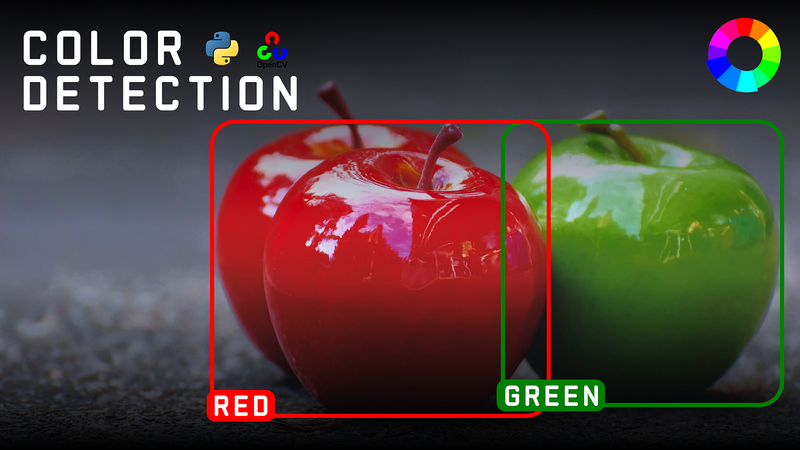
Detection of image color educates the students on the basics of pixel analysis and simple image processing. Analyzing the pixel values on an image, the learners are able to either detect the predominant colors, follow the color areas, or detect a range of colors. The project is best suited to learn about the process of numerical representation of digital images and simple AI logic that can be used to produce meaningful data using visual data as input.
Object Detection Basics
Basic concepts Object detection in AI allow students to understand how the AI systems spot and locate objects in images in the form of bounding boxes and pre-trained models. This project brings the distinction of image classification and object detection and demonstrates the ability to detect many objects in one image. The students are instructed to assess model performance through the measurement of accuracy of system detection and labeling of objects supporting the significance of precision and reliability in the use of AI.
Intermediate AI Project Ideas
It is targeted at students who have mastered Python, and have some idea about the basics of machine learning and are prepared to construct more practical, real-world AI applications. Intermediate AI projects go beyond single examples and challenge students to use larger datasets and more complicated workflows, as well as more in-depth approaches to problems.
This is the level where the learners tend to experiment with both supervised and unsupervised tools of learning. Together with the enhancement of classification and prediction models, students might come across such methods as clustering that gathers data in groups through the patterns without prior labeling. Such projects allow students to learn how AI may reveal the concealed structures in data and interpret complex information.
The type of intermediate AI projects enables the transition between entry-level exercises and significant systems by assisting students to develop more technical confidence and develop solutions that most closely resemble actual AI applications utilized in the industrial and research domains.
Natural Language Processing (NLP) Projects
Natural Language Processing (NLP) is the sub-discipline of artificial intelligence that allows a computer to read, comprehend, and write and understand human language in the same significant manner. With the help of NLP projects, students get to know how AI analyses text and speech to execute such functions as sentiment analysis, translation and respond to questions. Students can also experiment with large language models as they advance and solve more advanced tasks, such as content summarization, transcription, and AI-based educational support, which will provide understanding of the nature of the present-day language-based AI systems.
Sentiment Analysis Tool
A sentiment analysis tool gives a student an opportunity to examine opinions and emotions of textual information in the form of product reviews, survey findings, or posts on social media. The proposed project presents natural language processing methods that identify positive, negative, and neutral text. Students are able to play with a sentiment analysis model that has been pre-trained to better fit their particular dataset, which can be useful in learning how models can be adapted to specific language and context.
Language Translation Assistant
A language translation assistant illustrates how sequence-to-sequence models and use of deep learning methods can be applied in translating text of one language into another. With the help of multilingual data sets, students get acquainted with the ways AI captures linguistic patterns, grammar, and meaning of various languages. This project gives us the clue to the basis of the modern machine translators systems which are implemented in the real world.
Text Summarization Script
A text summarization script assists the students in summarizing long articles or documents by extractive or abstractive methods of summarization. This project educates the understanding of AI to discover the important information and still maintain the text meaning. The performance measures that students should use to evaluate its models include accuracy, F1 score and ROUGE, which assists students to measure quality, relevance and effectiveness of generated summaries.
Advanced Machine Learning Concepts
Topical machine learning principles are geared towards creating highly-optimized and intelligent systems that are able to learn on complex data and evolve with time. These theories are deep learning, reinforcement learning and ensemble methods that are extensively applied to AI in the real-world. Their mastery assists the students in creating scalable and high-performing models of problematic issues in the various industries.
Predictive Modeling

Prediction-based projects introduce students to key machine learning concepts such as regression, forecasting, and handling real-world uncertainty. When building these projects, it is important to use a test dataset to evaluate model accuracy and ensure that the model performs well on unseen data. Additionally, students should be aware of data drift, which refers to changes in the data environment over time that can degrade model performance, making it necessary to periodically retrain models with new data.
Weather Forecast Predictor

One of the weather forecast predictor presents the students with time-series analysis which involves using past weather data to predict what will happen in the future. The project would enable learners to recognize trends, seasonality and model-in assessment methods to determine the accuracy of the forecast. The more advanced learners will have a chance to study reinforcement learning systems to maximize prediction strategy over time and learn more about the way AI systems enhance choices in a dynamic environment.
Stock Price Prediction
The fiscal forecasting of stock prices introduces students to market data, volatility, and the practical constraints of forecasting. In this project, the measures of evaluation of the model performance will be based on the accuracy, F1 score, AUC, and RMSE, which are useful to determine the reliability of classification and prediction error. The knowledge of these metrics can help the students to evaluate effectively the work of a model and make reasonable decisions instead of basing on predictions only.
Advanced AI Project Concepts

These ai student projects are suitable for highly motivated students, competitions, or pre-college portfolios. For those seeking advanced challenges, consider building an AI agent capable of automating complex tasks—such as financial analysis, content planning, or customer service—which can demonstrate real-world applications and industry relevance.
Deep Learning Challenges
Deep learning problems expose students to neural networks and representation learning, wherein models will learn useful trends on large and complex data sets using only their input. Students in these projects use the deep learning techniques to process high level tasks like image recognition, language understanding and predictive modeling. This practical learning enables students to comprehend the use of deep neural networks to drive most of the current AI.
Neural Network from Scratch
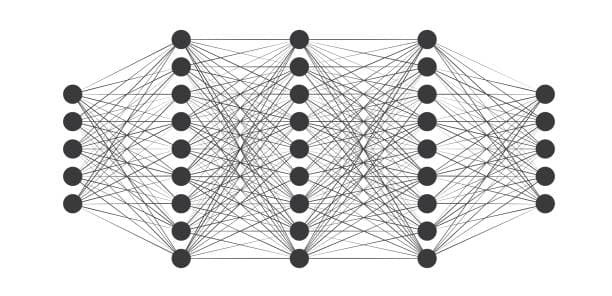
Taking the neural network parts directly as it is allows the students to learn the mechanics of neural networks in the simplest possible way. Through the use of simple layers, weight updates and backpropagation, learners can better understand the learning mechanism in models. To increase the accuracy of the output and to improve user experience of AI-based systems, students are advised to implement error correction tools, e.g. spell-checking algorithms or n-grams.
Generative AI Projects
In generative AI projects, students are able to perform using contemporary AI models to generate text, images, or music. These projects allow learners to learn about the way generative systems come up with new content by using learned patterns. Users are able to fine-tune pre-trained generative models to make the output of those models more specialized to their task, like by enhancing the style of writing, the aesthetic of an image, or even the composition of a song.
Advanced Computer Vision

Advanced computer vision projects revolve around real time detection, pose estimation and video analysis of real time or recorded video feeds. Video streams should be processed in real-time when there is a need to respond fast to an information like a surveillance system or gesture recognition. Such projects allow students to realize that AI processes visual information in frame-by-frame mode to give the correct and up-to-date information.
AI Projects for Final Year Students
For final year students in computer science and related disciplines, AI projects offer a unique opportunity to gain practical experience and showcase advanced skills in artificial intelligence and machine learning. Tackling an AI-powered project not only strengthens your technical foundation but also demonstrates your ability to apply concepts like natural language processing, computer vision, and predictive modeling to real-world scenarios. These projects are ideal for building a standout portfolio, impressing potential employers, and even laying the groundwork for future research or innovation. By engaging in hands-on AI projects, final year students can bridge the gap between academic theory and industry practice, gaining valuable insights and experience that are highly sought after in today’s tech-driven job market.
Capstone Project Ideas
The decision on the appropriate capstone project can make the difference between the student and the professional. The following are some of the influential project concepts that exploit the newest natural language processing, machine learning, computer vision, and deep learning:
Develop a chatbot: Create a chatbot based on natural language processing and machine learning algorithms to process customer requests or automate the support.
Build an image classification system: Create a system to classify images using convolutional neural networks to identify objects or classify images to be used in medical diagnosis or inventory.
Create a sentiment analysis tool: Develop a deep learning-based sentiment analysis tool that uses feedback via social media or customers.
Develop a predictive modeling system: Train a machine learning predictive model to predict trends, e.g. sales or energy consumption.
Design a recommender system: Implement a recommender system based on collaborative and content filtering, which will be used to customize user experiences in an e-commerce or streaming service.
Implement a speech recognition system: Install a speech recognition software based on a deep learning model to decode speech into text so that it can be read or sent online.
Build a language translation system: Create a machine learning language translation model to break the language barrier in international communication.
Create an object detection system: Develop an object detector using computer vision and deep learning algorithms to use in areas such as self-driving car or security.
These project concepts not only assist in gaining practical experience in the use of advanced models and algorithms, but also equip you to handle complex problems in the AI industry.
Real-World Problem Solving with AI
The practice of artificial intelligence is transforming how we address real-life issues in industries. With the help of natural language processing, computer vision, and machine learning methods, students can create AI-driven solutions that will result in a noticeable difference. The following are some of the ways in which AI tackles real-life issues:
Image classification and object detection for self-driving cars, enabling vehicles to recognize pedestrians, traffic signs, and obstacles.
Sentiment analysis to extract meaning of customer reviews and online reviews, which assist businesses in refining products and services.
Predictive modeling for financial forecasting and risk analysis, supporting smarter data-driven decisions in banking and investment.
Natural language processing to create chatbots and language translation systems to make online communication more successful and effective.
Computer vision for surveillance and security systems, automating the detection of suspicious activities or unauthorized access.
Anomaly detection to identify fraud or unusual patterns in sensitive data, enhancing security in sectors like finance and healthcare.
Recommendation systems that personalize shopping or content experiences in e-commerce and online advertising.
Speech recognition using voice assistants and hands-free device control, which enhances accessibility and interaction with users.
Through such projects, not only do the students get to have direct exposure to the latest AI tools and techniques but also help solve multi-faceted problems that are real-world challenges.
Industry Collaboration Opportunities
Working with industry partners can help to turn your AI project into a classroom activity and turn into a real-world solution. The following are some of the ways students can be involved with the wider AI ecosystem:
Work with companies to develop AI-powered systems tailored to specific industries, such as healthcare diagnostics or financial data analysis.
Collaborate with researchers to create AI-driven solutions that serve particular businesses, like healthcare diagnostics or financial data analysis.
Partner with startups to discover emerging machine learning algorithms, deep learning models or novel uses of artificial intelligence projects.
Engage with government agencies to support the development and implementation of the latest AI solutions to meet the requirements of the emerging markets.
Support non-profit organizations by engaging in charitable causes, including creating AI to assist non-profit organizations, e.g., disaster management or educational efforts.
Participate in hackathons and competitions to solve real-world problems with AI, and get recognition and contacts.
Join online communities and forums in order to meet others working with machine learning, exchange code, and keep to the most recent research papers and industry trends.
Such collaboration opportunities do not only offer helpful, practical experience but also allow the students to develop professional networks and work on significant, real-world projects.
Tools and Resources for AI Student Projects
Working on AI projects will result in a lot less frustration and a faster learning process when the appropriate tools and resources are chosen. To the vast majority of students, Python is the first and most suggested language since it is simple and has a broad range of AI libraries, whereas R is handy to perform statistical analysis and JavaScript is handy to create AI applications with browsers or similar interactions.
Several websites (e.g. Jupyter notebook, Google Colab, etc.) allow experimenting with code, visualizing the data, and executing the models without the usage of complex setups. GitHub assists students to organize the code, cooperate with colleagues, and create a solid project portfolio, whereas Kaggle provides public datasets, notebooks, and competitions, which are ideal choices when it comes to practical experience.
Conclusion
The students can easily acquire practical skills, confidence, and understanding of artificial intelligence by working on the AI projects as they are among the quickest methods of learning it. With practical work, learners transition between theory and practice, reinforcing technical and problem-solving skills.
The students are made to be experimental, tolerate failures as a learning process, the students keep trying their ideas over and over and they are encouraged to come up with ideas that are bold. Each successful or unsuccessful project is an experience to be learned, and AI projects are a strong stepping-stone to the future life in the fields of technology and research.
FAQs
What are some AI project ideas for students?
Depending on their level of expertise, students have the ability to work on easy AI projects, such as spam email classifiers, sentiment analysis applications, and basic chatbots, intermediate projects, such as stock price prediction applications, emotion detection applications, and clustering-based data analysis systems, and advanced projects, such as generative AI, neural networks, and real-time computer vision systems.
Which AI is best for a school project?
Simple machine learning or NLP models based on Python-based AI projects are the most available and practical in case of school projects. Applications such as Jupyter Notebook, Google colab, or trained models enable students to deploy applications such as chatbots, sentiment analysis, image recognition, or recommendation systems without any elaborate mathematical or technical understanding.
What are the 5 AI ideas?
These 5 friendly AI project ideas are:
NLP-based Spam Email Classifier,
Text or facial input Emotion Detection App,
Stock Price Prediction,
Basic chatbot development, and
Image color detector or object detector.
What are the top 5 hot topics in computer science?
In the present day, the hottest subjects in the field of computer science are
Artificial Intelligence and Machine Learning,
Cybersecurity,
Cloud Computing,
Data Science and Big Data, and
Internet of Things (IoT).
These fields are fast changing, and extremely influential in all sectors and present good prospects of student projects and research work.
Why do 85% of AI projects fail?
The most common reasons why many AI projects fail include poor definition of the problem, inadequate quality of data, unreasonable hopes, or insufficient knowledge in the domain. Moreover, the poor performance of AI systems can be the result of poor model assessment, overfitting, or ethical neglect, which is why it is essential to plan, test, and validate every project carefully.
Comments
Your comment has been submitted