Best AI Courses for Kids in 2024: Complete Comparison
Best AI Courses for Kids in 2025: Complete Comparison
Artificial Intelligence isn’t just a buzzword anymore—it’s something kids interact with every single day. Whether they’re chatting with voice assistants, watching personalized recommendations pop up on YouTube, or playing games powered by smart algorithms, AI systems are shaping how they think, learn, and explore the exciting world of technology. In 2025, parents are increasingly searching for the best AI courses for kids because early exposure to artificial intelligence is becoming just as essential as learning to read, write, or solve math problems. Kids don’t just learn facts; they learn how AI works, why it matters, and how it influences future careers waiting for them a decade from now.
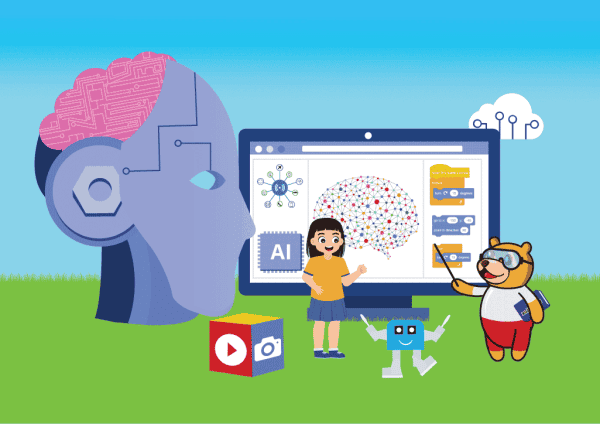
Today, even elementary and middle school kids can explore AI concepts using friendly tools, hands on projects, exciting projects, and simple interfaces that demystify complex ideas. From generating artwork with generative AI to building chatbots that can answer questions, the possibilities are endless. When young students engage in children AI courses or dive into AI education for kids, they’re not just learning computer science—they’re building valuable skills, problem solving skills, coding skills, and essential skills that help them solve problems creatively and confidently.
Whether your child is curious about creating games, wants to understand how virtual assistants work, or hopes to build AI apps someday, this guide breaks down every step. Let’s dive into the exciting world of AI learning for children and discover the best pathways that help kids learn, teach kids essential tech skills, and encourage children to build a strong foundation in artificial intelligence.
Why AI Education for Kids Matters in 2024
Artificial intelligence isn’t a distant future—it’s the present. Kids see it every day in self driving cars on the news, voice assistants at home, natural language processing tools online, and AI apps embedded in their favorite platforms. Early exposure to AI literacy gives kids the chance to understand how technology influences decisions, solves problems, and transforms real world industries. AI education for kids is growing globally because AI concepts shape the future of medicine, climate science, finance, robotics, entertainment, transportation, and many future careers that don’t even exist yet.
Parents often wonder why it’s important for their child learn AI at a young age. The answer is simple: kids learn faster, absorb complex concepts more easily, and grow comfortable experimenting with new tools when they start early. AI learning for children also strengthens critical thinking, critical thinking skills, and problem solving, preparing them for high school, higher studies, and careers powered by AI systems. Even high school students who plan to pursue computer science or programming languages later benefit enormously from starting early.
Kids who start exploring AI topics early can understand how AI works, including virtual assistants , what algorithmic bias means, how machine learning allows computers to recognize images, and how large language models generate text. With proper guidance from teachers, expert teachers, parents, and engaging projects, they build confidence and curiosity.
AI isn’t just technical—it teaches creativity. When young students use generative AI to create stories or images, or explore media lab tools to experiment with sounds and animations, they develop a deeper understanding of both science and imagination. When they learn artificial intelligence through hands on projects, hands on activities, and hands on experimentation, they naturally understand AI applications and AI systems in their own pace and own way.
Today, schools worldwide—from middle school to high school—are encouraging students to study artificial intelligence to build future-ready skill sets. Adding AI classes for kids at home through online classes creates an even stronger foundation. With unlimited access to resources online, encouraging students and encouraging children to experiment with AI is becoming the new norm.
In short: the future belongs to kids who understand AI. And the best way to help them is by choosing the right children AI courses that combine real world learning, fun projects, and strong foundations in artificial intelligence.
How to Choose the Best AI Courses for Kids
Not all AI courses for kids are created equal, and choosing the right program can feel overwhelming. Parents often compare dozens of online classes, wondering which ones align with their child’s age, learning style, and curiosity. The best AI courses for kids provide a balance of structure, flexibility, fun, and hands on learning experiences that keep kids engaged from the very first lesson.
The first thing parents should consider is age appropriateness. A middle school learner may be ready for text based coding and AI programming kids tools, while younger kids might benefit more from visual interfaces or block-based platforms. Courses specifically designed for young students usually simplify complex ideas, allowing students to absorb computer science and artificial intelligence without feeling intimidated. For teenagers and high school students, programs with deeper machine learning topics or Python-based modules offer a strong foundation in programming skills that supports many future careers.
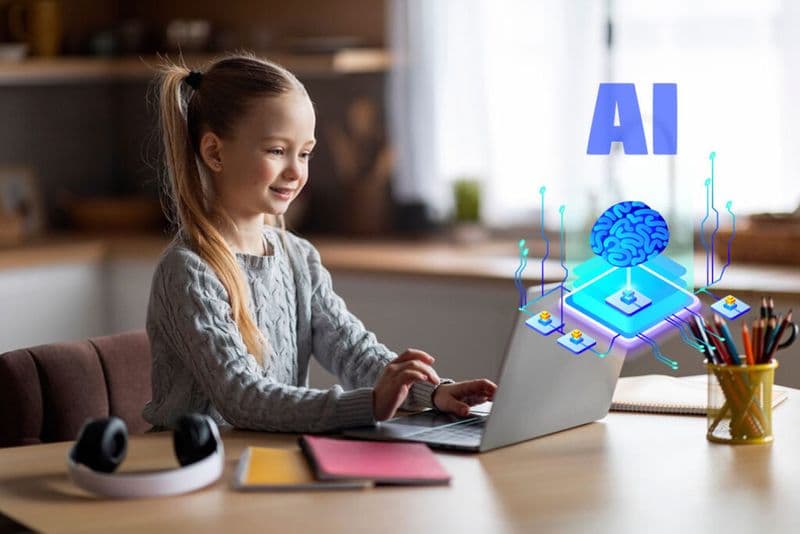
Next, think about whether live instruction or self paced learning works better for your child. Live instruction ensures personalized attention and direct feedback from expert teachers, while self paced modules give kids unlimited access to lessons they can revisit at their own pace. Some parents prefer a blend: structured lessons combined with interactive, hands on projects that bring AI concepts to life. Look for courses that make learning interactive and encourage students through quizzes, games, and real world projects.
Another factor to evaluate is the credibility of the course. Programs built by reputable media lab researchers, AI professionals, or experienced teachers often guarantee higher academic quality. Certifications also play a role—especially for older learners. Artificial intelligence courses kids engage in today can help them stand out later in high school applications, competitions, internships, and advanced coding classes.
Mentorship matters too. Kids learn best when guided by trained teachers who can simplify complex concepts like natural language processing, computer vision, algorithmic bias, and large language models. Whether your child is learning ai basics or diving deeper into machine learning kids material, encouraging children with supportive instructors makes a big difference.
Lastly, make sure the platform’s projects excite your child. Engaging projects like building chatbots, creating games, training models to recognize images, or designing AI apps make a child learn faster and more confidently. Real world applications help students connect theory to problem solving and everyday life—showing them how AI works behind self driving cars, voice assistants, or popular recommendation systems.
With these criteria, parents can confidently choose AI classes for kids that will benefit them in high school that deliver valuable skills, meaningful learning ai experiences, and strong foundations in programming skills.
Types of AI Learning Programs for Children
AI education isn’t one-size-fits-all. Different age groups and learning styles require different formats, which is why modern AI courses for kids offer a wide variety of approaches. Some focus on visual creativity, others on coding skills, and some dive deeper into real AI systems and machine learning.
1. Block-Based AI Coding for Younger Kids
Children ages 6–8 often start their ai journey with block-based interfaces. These platforms use colorful drag-and-drop blocks to teach kids AI concepts, letting them build simple AI applications without typing programming languages. They might train models to recognize images of animals, create basic chatbots, or explore how AI works through stories and games. These are perfect for early exposure because they simplify complex ideas and make learning interactive.
2. Python-Based AI for Pre-Teens and Teens
As kids grow older, especially middle school and high school students, they’re ready for more advanced topics like text based coding, Python programming, computer vision, natural language processing, algorithmic bias, and generative AI. Python-based AI coding for kids platforms help them build machine learning projects, work with datasets, create AI apps, and explore real world applications. Kids AI programming becomes more meaningful when they understand the logic behind ai systems and machine learning.
3. Project-Based Machine Learning Courses
Many platforms focus on machine learning for kids using real datasets and hands on activities. Young students can explore topics such as recognizing images, classifying sounds, building simple recommendation systems, or training chatbots with personalized guidance from teachers. These real world experiences teach kids how AI works beyond theory.
4. Game-Based AI Learning
Some kids learn best through play—and many AI programming kids platforms integrate creating games into their curriculum. Kids might build their own AI-powered arcade game, design a robot that reacts to emotions, or create levels using AI-generated artwork. These courses are exciting, interactive, and spark curiosity.
5. Self-Paced Online Classes
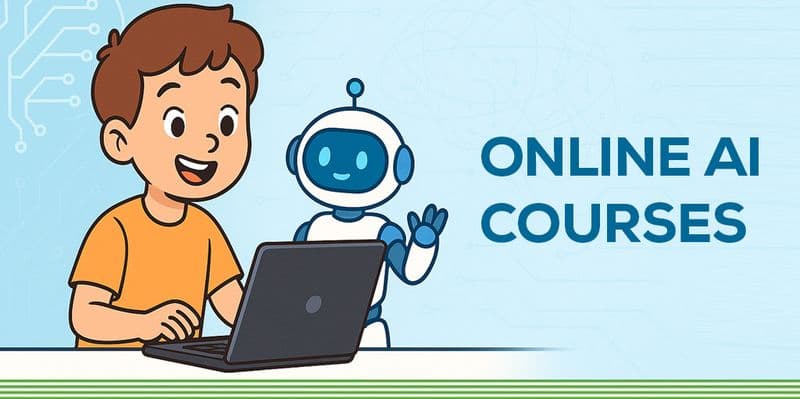
Self paced AI courses allow kids to learn artificial intelligence at their own pace, revisit lessons anytime, and enjoy unlimited access to interactive modules. This style is ideal for busy families or independent learners.
By understanding these types of programs, parents can easily choose children AI courses that match their child’s developmental stage, interests, and motivation levels while ensuring a strong foundation in artificial intelligence.
Interactive Platforms: Best AI Courses for Beginners
If your child is just starting their ai journey, beginner platforms with simple interfaces and engaging projects offer the perfect introduction. These platforms make AI education for kids fun, friendly, and approachable.
1. LittleLit AI
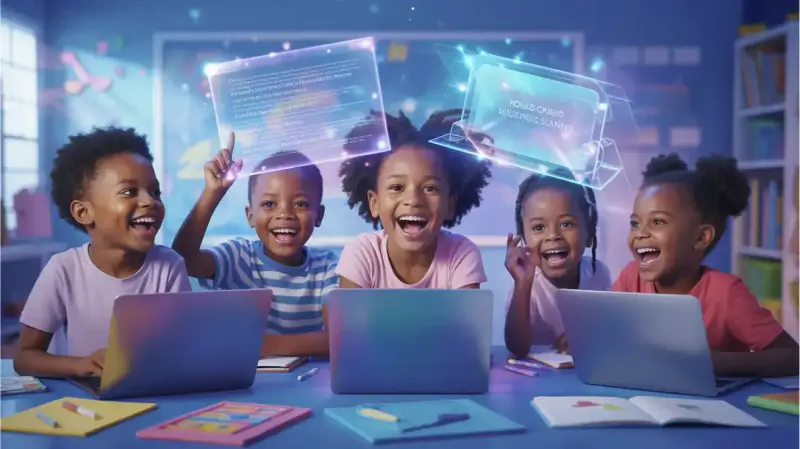
LittleLit AI focuses on making AI literacy easy for young students. Kids learn artificial intelligence through playful activities, hands on projects, and simple explanations. The platform is specifically designed for early learners and uses visuals to break down complex concepts and enhance problem solving skills .
2. Create & Learn
Create & Learn is well known for offering the best AI courses for kids in early grades. Their classes include live instruction, personalized attention, interactive sessions, and engaging projects such as training models to recognize images or building chatbots. Their AI courses include real world examples, making learning ai relatable.
3. AI World School
AI World School provides children AI courses that range from AI basics to advanced modules. Kids explore machine learning kids activities, visual coding challenges, and real world applications of artificial intelligence. Their hands on approach ensures students stay excited and curious throughout the course.
These beginner platforms make learning interactive, allowing students to understand AI concepts while having fun, creating games, and building meaningful projects.
Hands-On Learning: Machine Learning for Kids
Hands on projects help kids understand how AI works far better than theory alone. Machine learning for kids platforms encourage children to experiment, build models, and analyze real data.
ML for Kids (IBM-Supported)
ML for Kids is one of the earliest machine learning kids platforms. It helps young students explore machine learning using real datasets. Kids build projects that involve recognizing images, classifying text, analyzing sounds, and creating chatbots that respond intelligently. This platform strengthens problem solving, critical thinking, and computational reasoning.
Google’s Teachable Machine
Teachable Machine is perfect for AI programming kids who love creative experimentation. Kids can train computers to recognize images, sounds, or poses instantly. With simple buttons and visual feedback, they learn artificial intelligence concepts without typing code. This tool is also commonly used in media lab experiments and school workshops.
Project-Based Learning Modules
Many modern AI courses for kids add project-based learning modules where students build AI applications like mini recommendation bots, simple self driving cars simulations, and virtual assistants. These exciting projects reinforce real world applications and make AI learning unforgettable.
Structured Courses: Artificial Intelligence Classes for Kids
Some children thrive with structure—clear paths, milestones, challenges, and progression. For them, structured artificial intelligence courses kids programs offer the perfect blend of discipline and creativity.
1. Code.org AI Modules
Code.org creates child-friendly learning pathways introducing natural language processing, computer vision, and basic generative AI. These classes are carefully designed for school use and help kids build strong foundational AI literacy.
2. STEMpedia AI Curriculum
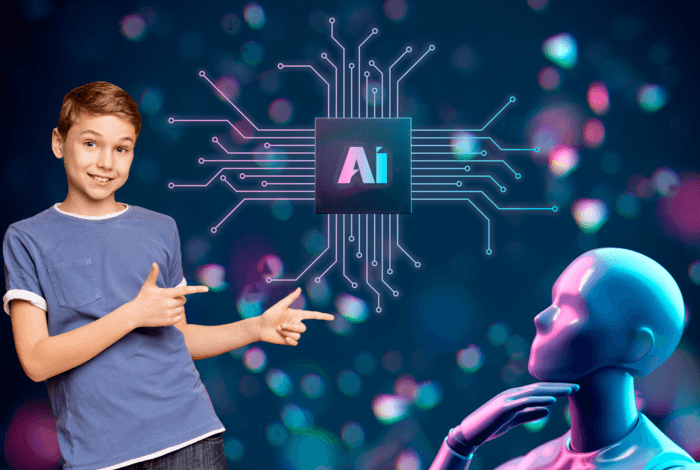
STEMpedia provides comprehensive courses that encourage students to understand AI concepts through hands on activities. From robotics integrations to data projects, their modules help students explore real world AI topics deeply.
3. FunTech’s Online AI Courses
FunTech combines online classes with live instruction, allowing students to learn artificial intelligence step by step. Their instructors simplify complex concepts, offer personalized guidance, and teach kids how to build engaging projects like AI apps or smart games.
Structured courses are ideal for parents who want long-term programs delivering essential skills, valuable skills, and strong foundations for future study.
AI Courses by Age Group: From Elementary to Teens
Choosing the right AI courses for kids depends heavily on age. A 7-year-old and a 15-year-old will not learn artificial intelligence in the same way, which is why platforms design children AI courses with age-appropriate AI concepts, hands on activities, and real world applications.
Ages 6–8: AI Through Visual Play & Simple Patterns
Kids in this age range are naturally curious. They enjoy colors, animations, storytelling, and games—so AI education for kids at this level is all about play-based learning ai. Courses specifically designed for them focus on:
Visual AI tools
Pattern recognition
Simple logic games
Friendly interfaces
Creating games using drag-and-drop blocks
These young students don’t need programming languages at this stage. Instead, they learn artificial intelligence through storytelling, puzzles, and hands on projects where they can recognize images, classify objects, and explore AI works behind the scenes of their favorite apps. This early exposure builds confidence, enhances problem solving, and helps them establish a strong foundation for future concepts.
Ages 9–12: Chatbots, Image AI & Logic-Based Thinking
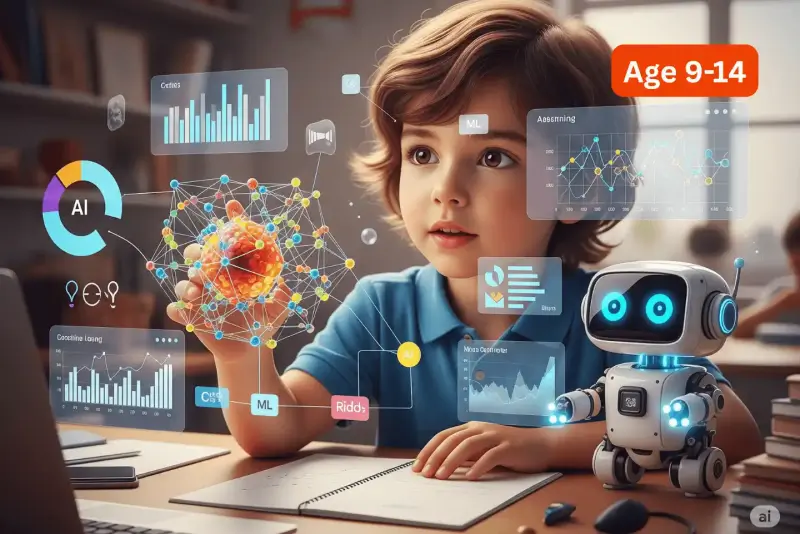
This is the perfect middle school age group where kids become capable of deeper logical reasoning and stronger critical thinking skills. Children in this range enjoy understanding how things work, so AI classes for kids begin to introduce more technical elements.
Common projects include:
Training chatbots through natural language processing
Image classification using computer vision
Text based coding basics
Exploring algorithmic bias
Understanding real world applications of ai systems
Kids AI programming platforms often combine coding classes with visuals to help them transition smoothly into more advanced projects. This age group is ready for slightly complex ideas explained simply, allowing students to connect AI concepts with their daily life experiences.
Ages 13–16: Python, Machine Learning & Ethical AI
Teenagers—especially high school students—are fully prepared to dive into advanced machine learning for kids. They can explore Python, data science basics, algorithmic logic, and deeper artificial intelligence topics. At this stage, courses are designed to prepare students for many future careers in STEM fields.
Teens learn:
Python programming & text based coding
Training ML models
Understanding large language models
Ethics, generative AI, and algorithmic bias
Creating AI apps, chatbots, and simple self driving cars simulations
With personalized attention from expert teachers and structured, rigorous modules, teens gain valuable skills and essential skills they can use in competitions, internships, and advanced computer science classes.
Free AI Courses for Kids vs Premium Programs
Parents often wonder whether free online classes are enough or if premium courses offer real advantages. The truth is: both can be useful, depending on your child’s learning style, age, and goals.
Free AI Courses: What They Offer
Free platforms usually provide:
Basic lessons introducing AI concepts
Simple projects to understand how AI works
Tools to experiment with recognizing images or sound classification
Limited but fun engaging projects
Kids love experimenting with free tools like Teachable Machine or Scratch-based AI add-ons. These options are great for early exposure and allow kids to learn at their own pace with unlimited access to beginner-friendly resources.
However, free courses often lack:
❌ Live instruction
❌ Personalized guidance
❌ Structured curriculum
❌ Long-term progression
❌ Certifications
For young students who are naturally curious and independent, free tools are a wonderful starting point.
Premium AI Courses: What They Provide
Premium children AI courses provide:
Expert teachers trained to simplify complex concepts
Live instruction with real-time feedback
Personalized attention and tailored learning paths
Certifications for middle school and high school students
More in-depth, project-based learning ai
Hands on projects using real datasets
Step-by-step lessons in programming languages
Premium platforms are specifically designed to help a child learn artificial intelligence in a guided, engaging manner. They cover a wide range of AI topics, from generative AI to natural language processing, making learning interactive and building problem solving skills in a structured way.
These courses are ideal for:
Kids who want to develop coding skills
Students preparing for tech competitions
Teens exploring future careers in computer science
Parents seeking high-quality, reliable instruction
Both free and paid options play a role—but premium courses offer deeper understanding, real world projects, and a stronger educational experience.
What Kids Learn in AI Coding Classes
AI courses for kids teach far more than basic coding. They introduce a broad spectrum of computer science principles, logical concepts, and real world applications that foster creativity and curiosity.
Here’s what kids learn in artificial intelligence courses kids programs:
1. Python Fundamentals
Older kids and high school students learn Python because it’s the most widely-used programming language in AI development. Python forms the foundation for machine learning, data science, and AI applications. Through text based coding, kids understand variables, loops, conditions, data structures, and libraries—all essential skills for many future careers.
2. Neural Networks (Explained Simply)
Kids learn how neural networks mimic the human brain. Courses specifically designed for students use visual examples—like recognizing images of pets—to explain how AI systems train themselves. These simplified models help kids understand complex concepts without overwhelming them.
3. Ethics & Responsible AI
AI literacy includes teaching kids about algorithmic bias, fairness, safety, and responsibility. They learn why responsible programming matters, how large language models work, and how AI decisions impact the real world. Teen-friendly modules also explore generative AI and prompt engineering in age-appropriate ways.
4. Logical Thinking & Experimentation
AI programming kids courses focus heavily on problem solving, critical thinking, and experimentation. Kids analyze outcomes, adjust parameters, troubleshoot errors, and learn artificial intelligence using real world reasoning.
5. Building Exciting Projects
Kids love the hands on part of AI. Through engaging projects and hands on activities, they create games, design chatbots, experiment with computer vision, build voice assistants, and even simulate self driving cars. These practical experiences help a child learn faster, connect ideas, and develop programming skills.
Comments
Your comment has been submitted