Online vs In-Person Coding Classes: Which is Best for Your Child?
Online vs In-Person Coding Classes: Which is Best for Your Child?
As a parent, choosing between online vs in-person coding classes can feel confusing. You want flexibility, but you also want structure. You want convenience, but you worry about focus and social growth. The good news is that both virtual coding classes and traditional in person classes have improved a lot in recent years. The real question is not which format is better overall, but which one fits your child’s age, learning styles, and goals.
Today, coding classes focus on more than just typing code. They build critical thinking, problem solving skills, and logical thinking. Whether your child learns online or in person, the right environment can help them understand computer science concepts and apply them with confidence. We will explore the significant benefits of both formats. By the end, you will have a clear framework for choosing a right coding class for your child based on their unique needs, not just trends.
The Flexibility of Virtual Coding Classes
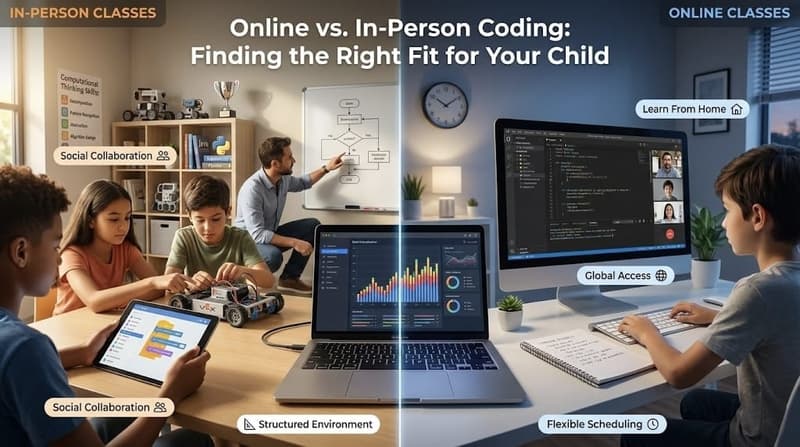
Virtual coding classes have grown fast because they solve real problems for families. They break physical barriers and provide access to quality coding courses online from anywhere. Children can attend classes from home, follow flexible scheduling, and learn at their own pace without daily travel.
Online coding works well for kids who enjoy independent learning. Many online programs use live mentors, structured lessons, and project based learning. This helps students stay engaged while practicing coding regularly. Recorded sessions also allow revision, which builds a deeper understanding of coding concepts over time.
Another advantage is exposure. Online learning gives young learners the chance to dive into web development, app development, data science, and machine learning. Kids can explore programming languages early. This helps build their computational thinking skills and also prepares them for tech jobs later in life.
Parents often notice that online coding helps children build focus and responsibility. Logging in on time, following instructions, and completing projects encourages discipline. For high school students, online coding reflects real virtual workspace in software development and engineering jobs.
Are Online Coding Classes Effective for Kids?
Many parents ask the same question. The honest answer is yes, only when the program is well designed.
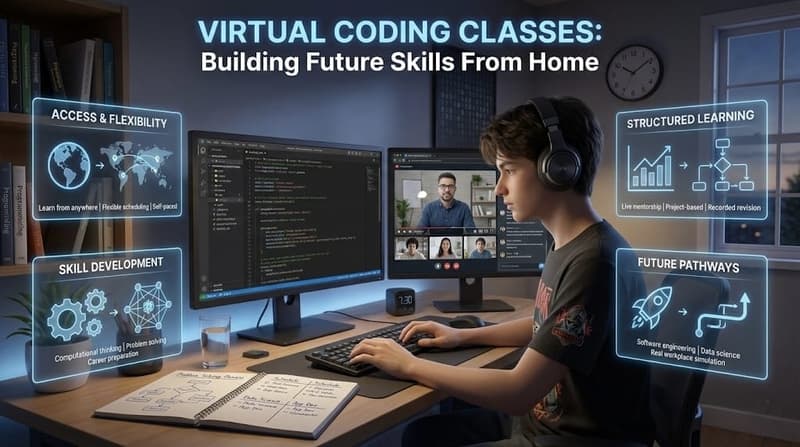
Effectiveness depends on curriculum structure, mentor involvement, and engagement level. Strong online coding courses include live interaction, instant feedback, and clear learning paths. Students do not just watch videos, they solve problems, write code, and fix errors during class.
Project based learning plays a key role. Kids use logic, data structures, and problem-solving when they create games or simple apps. This builds confidence and critical thinking naturally.
Online classes are especially effective for motivated learners and older students. Most students in virtual settings learn faster when lessons match their skill level. Programs that track child’s progress and adjust difficulty help maintain steady growth.
For elementary school students, success depends on engagement design. Interactive platforms, visual tools, and quick activities keep young learners engaged and make learning fun.
The Social Aspect: Benefits of In-Person Coding Classes
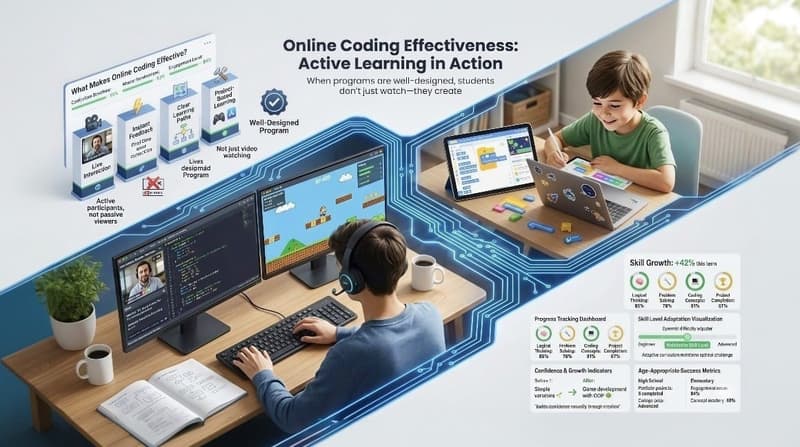
In-person coding classes offer strengths that many families still value. Face-to-face learning creates real-time interaction that helps kids feel connected. Students go to class together, ask questions, and learn from each other's mistakes.
One of the key benefits of in-person coding classes is peer motivation. Seeing classmates solve problems encourages curiosity. Coding competitions and group tasks help kids develop communication skills and teamwork.
In-person classes also support children who struggle with distractions at home. A classroom setting provides routine and structure. Immediate physical feedback from instructors helps clarify complex ideas quickly, especially for beginners.
In-person classes are great for young learners. They often need guidance to succeed. Physical presence helps teachers notice confusion early and adjust their teaching style.
Hands-on Collaboration and Immediate Physical Feedback
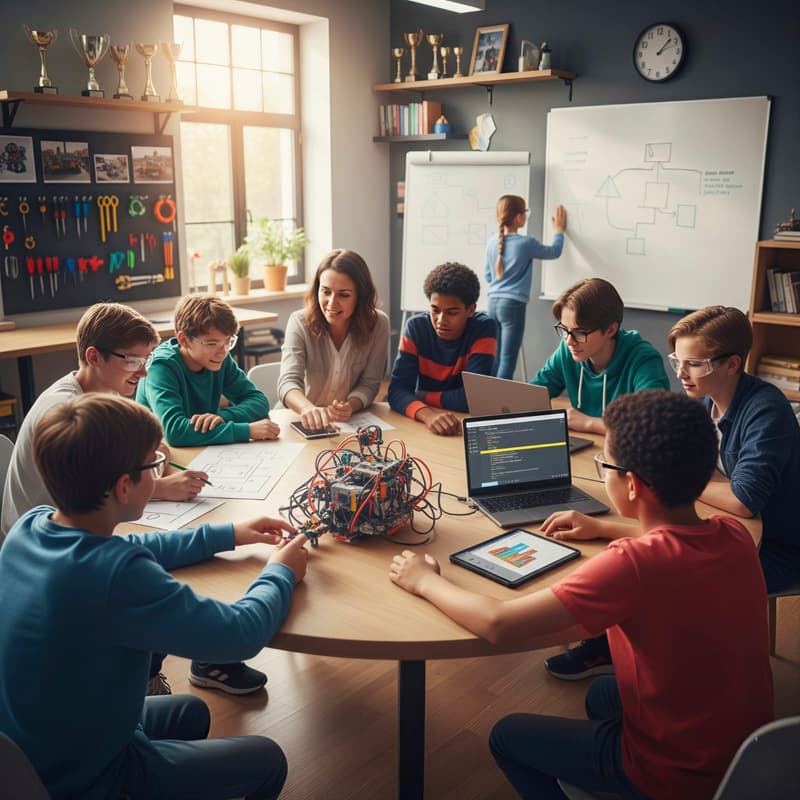
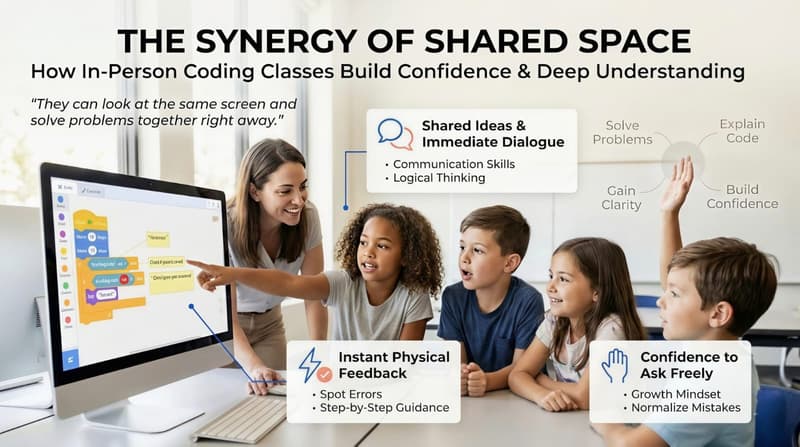
Hands-on collaboration works best when children share the same space. In-person coding classes let kids share ideas. They can look at the same screen and solve problems together right away. This kind of interaction builds logical thinking and strengthens communication skills. When students explain their code, they gain clarity and confidence. These moments are tough to fully recreate online, especially for young learners.
Immediate physical feedback is another strong advantage of in-person classes. Teachers can spot errors quickly and guide students step by step. This helps children understand coding concepts without feeling stuck. For many learning styles, seeing and hearing guidance at the same time makes a big difference.
In-person environments also encourage kids to ask questions freely. Younger students usually prefer raising their hand over typing in a chat box. This matters at a young age, when confidence is still forming. Being around peers who are learning makes mistakes feel normal. It also helps build a growth mindset.
Decision Guide: Choosing a Coding Class for Your Child
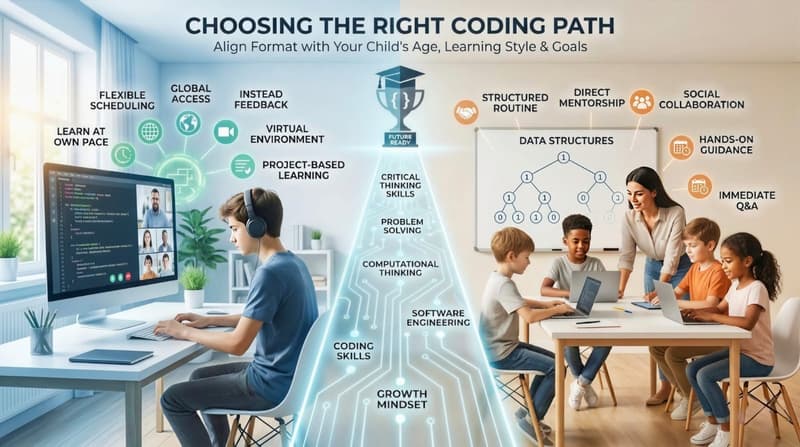
Choosing coding class for child starts with understanding who your child is as a learner. Age plays a major role. Younger kids often need structure, routine, and personal interaction. Older students often manage online coding well. They also appreciate the freedom that online learning offers. Attention span, maturity, and comfort with screens all affect how well a child learns in a virtual environment.
Learning styles are just as important. Some kids like working independently and exploring new skills on their own. These students often do well in online coding courses that allow them to move at their own pace. Other kids prefer guided instruction and regular check ins. In-person classes work better for them. This is especially true when learning coding skills or complex concepts.
Family schedule also matters. Online classes offer flexible scheduling and remove travel time. This helps families with busy routines. In-person classes offer a set structure and fewer distractions. This helps children who find it hard to focus at home. Social interaction in a physical classroom also supports emotional growth.
Long term goals should guide the decision. If coding is a hobby, both formats work well. If your child wants to be a software developer or engineer, practice is key. Consistency matters more than the format. Regular coding practice builds technical skills. It also enhances problem-solving and critical thinking over time.
Evaluating Tutor-to-Student Ratios and Engagement Levels
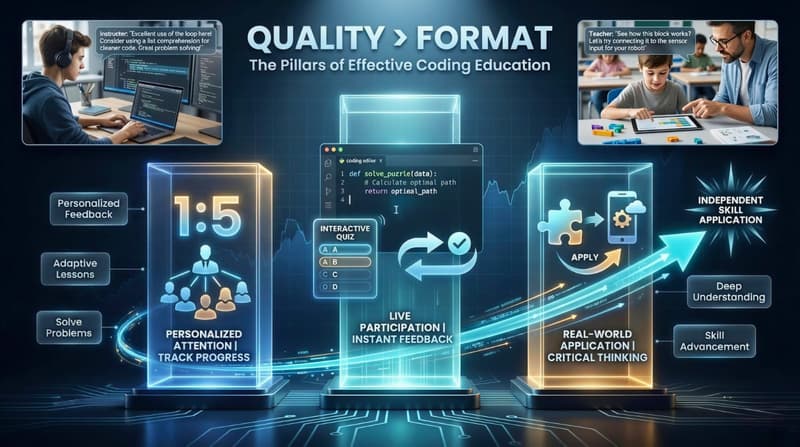
Quality matters more than whether classes are online or in-person. Tutor to student ratio has a direct impact on learning outcomes. Smaller groups help instructors closely monitor each child's progress. They can then adjust lessons based on skill level. This leads to deeper understanding and steady improvement.
Engagement levels are equally important. Good programs encourage students to practice coding during class, not just watch. Live coding sessions, guided exercises, and instant feedback help kids stay involved. These features enhance computational thinking and equip students to solve problems on their own.
Strong coding classes focus on real problem solving instead of memorization. They teach students how to think, debug, and apply logic. This method gets kids ready for future studies in computer science, data analysis, and software development.
Hybrid Models: The Best of Both Worlds?
Hybrid models combine virtual coding classes with in-person sessions. This approach offers flexibility while keeping personal interaction intact. Students learn core concepts online and apply them during offline workshops or coding competitions.
This balance works well for many families. Kids enjoy learning online at their own pace while still benefiting from group collaboration. Hybrid programs also help students adapt to different learning environments as they grow.
Hybrid learning supports both independence and teamwork. It allows kids to build coding skills while developing communication and problem solving abilities.
Conclusion: There’s No “Best”—Only What’s Best for Your Child
Online vs in-person coding classes both offer significant benefits. The right choice depends on your child’s age, learning style, and goals. Focus on engagement, quality instruction, and steady practice.
When kids enjoy learning, they build confidence, creativity, and strong problem solving skills, no matter the format.
Comments
Your comment has been submitted