Scratch Coding Competitions for Kids
Scratch Coding Competitions for Kids
Scratch coding competitions give kids a powerful reason to learn coding with purpose. Instead of only following tutorials, students use Scratch to build real projects, solve problems, and present ideas to the world. From simple animations to full games and simulations, these competitions help children grow creativity, confidence, and computer science skills in a fun and structured way.
Scratch competitions welcome both beginners and advanced coders. Kids can work alone or in teams, explore various categories and learn how technology connects ideas with action. For many students, a Scratch coding competition becomes their first step into programming, problem solving, and future technology careers.
Understanding Scratch Olympiad
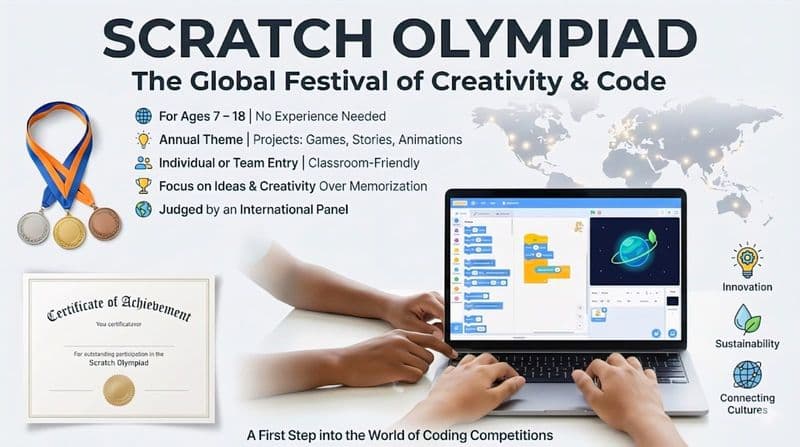
The Scratch Olympiad is one of the most popular scratch coding competitions for kids worldwide. It is often called an international olympiad for scratch learners. Students between the ages of 7 and 18 can participate. No prior competition experience is required.
The Scratch Olympiad focuses on creativity over memorization. Each year, students receive a theme. They build a Scratch project that matches the theme. This could be a game, animation, simulation, or interactive story. Projects are submitted online and reviewed by judges from different countries.
Students can join as individuals or as teams. It supports international kids from many regions, making it a truly global competition.
Key features include open access, flexible age group categories, and a strong focus on ideas rather than winning alone. For many kids, this is their first scratch coding competition.
Major Scratch Competitions Worldwide
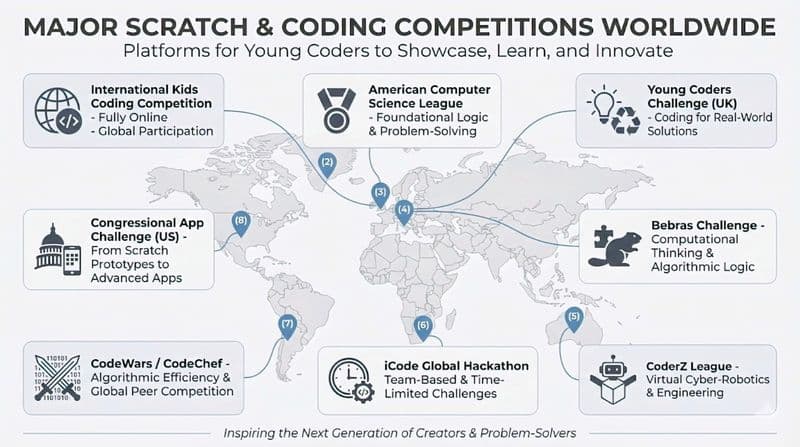
There are many national and international events besides the Scratch Olympiad. These competitions inspire kids to create scratch games, animations, and coding projects. These coding competitions offer students chances to compete, learn, and win awards.
IKCC – International Kids Coding Competition
The International Kids Coding Competition (IKCC) is a well-known online event. Thousands of kids join to show off their programming skills. The contest challenges students to create unique scripts using the Scratch programming language. It is fully online, making it accessible to kids from any country.
ACSL (American Computer Science League)
The ACSL introduces students to fundamental computer science concepts. The elementary division includes many languages. However, it mainly focuses on basics that work well with Scratch coding. It helps students develop logical thinking needed to solve problems efficiently.
Young Coders Challenge (UK)
This event encourages kids to use technology to solve real-world issues. It emphasizes creativity and knowledge application. Participants often make projects about environmental or social issues. This shows that coding can lead to positive change.
Bebras Challenge
While not exclusively for scratch, Bebras focuses on computational thinking. It tests a student's ability to break down complex tasks into simple algorithms. This skill is essential for mastering Scratch projects and advancing in computer science.
CoderZ League
For kids interested in robotics, CoderZ offers virtual cyber-robotics challenges. It connects block-based coding to hardware control. This offers a fun and interactive way to learn engineering principles.
iCode Global Hackathon
This is a fast-paced event. Teams work together to solve challenges within a limited time. It mimics the pressure and excitement of professional software development environments.
CodeWars and CodeChef Challenges
These platforms host coding contests that often include categories suitable for younger students. They focus on making algorithms efficient. Kids can test their skills against peers from around the world.
Congressional App Challenge (US)
This prestigious event invites students to create original apps. Many middle school students use Scratch to test their ideas. Then, they move to more advanced platforms. It links students to their local representatives. This shows why STEM is important in education.
Age-Appropriate Competitions
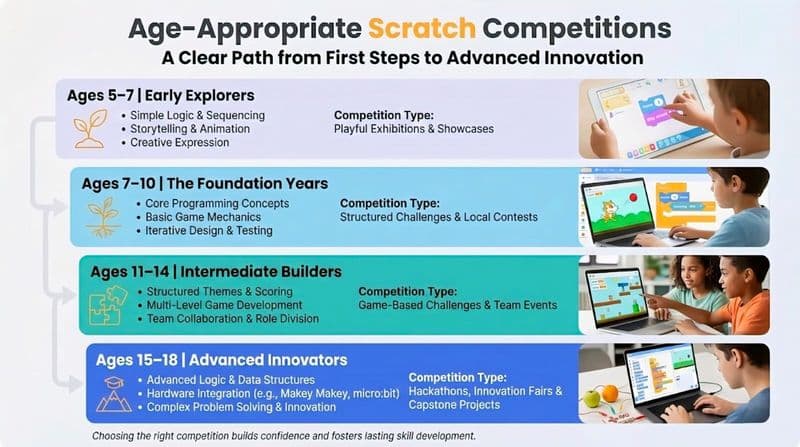
Pick the right scratch coding competition based on your child's age and skill level. A clear progression path helps kids go from simple visuals to complex game logic.
Ages 5–7: Early explorers
For the youngest coders, ScratchJr challenges are ideal. These events focus on interactive stories and simple animations. The goal is to introduce the concept of sequencing and cause-and-effect in a simple low-pressure environment.
Ages 7–10: The foundation years
At this stage, children enter beginner-friendly scratch challenges and local competitions. They learn to use loops, events, and simple variables. Projects often involve making interactive cards or basic chase games. This age group benefits from events that prioritize participation over winning.
Ages 11–14: Intermediate builders
Mid-school students can handle more structured themes and scoring criteria. Competitions for this group often ask students to create games. These games should include levels, scores, and win/loss conditions. This is where teams often start working together to split tasks like graphic design and coding.
Ages 15–18: Advanced innovators
High school students enter advanced programming contests and teen coding leagues. Their projects can involve complex simulations, managing data, or linking Scratch to other hardware. These students often use competitions to build portfolios for college admissions.
Preparing for Success
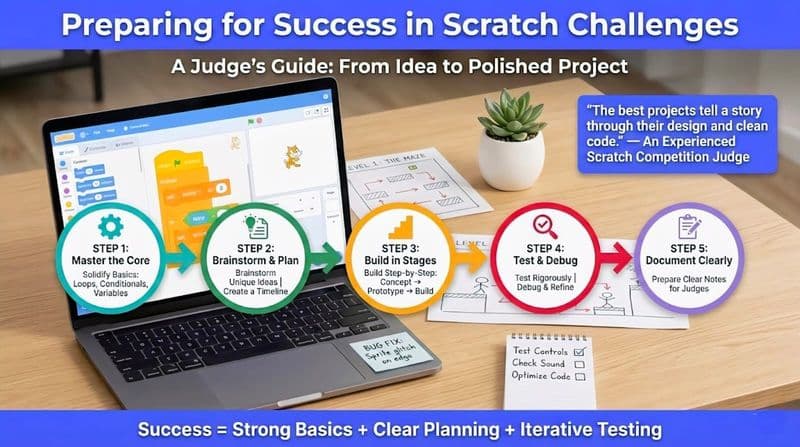
Success in any scratch challenge requires a plan. Kids who do well follow a clear path from idea to final implementation.
First, ensure a strong grasp of core coding concepts. These include loops, conditionals, and variables. Use the official Scratch tutorials to strengthen these basics.
Next, brainstorm ideas that fit the competition’s theme. Think about what makes a project unique. Then, create a timeline. Break the work into small steps: concept, prototype, building, and testing.
Testing is crucial. Kids must implement their project and debug any issues. This teaches resilience and problem-solving. Finally, prepare clear documentation. Judges need to understand the project's purpose and how the code works.
Award-Winning Project Examples
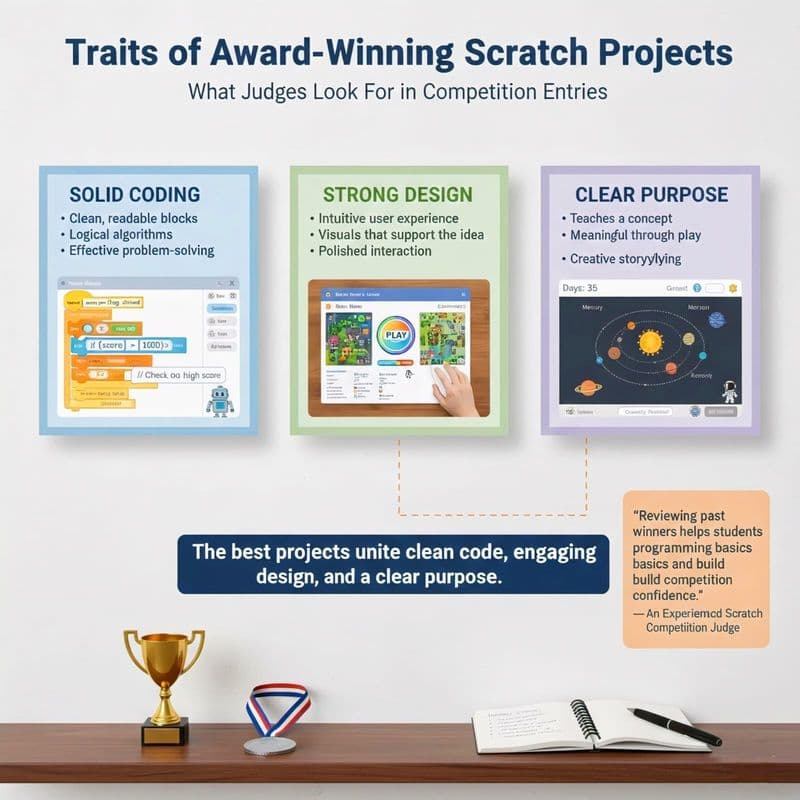
Award-winning Scratch projects in the Scratch Olympiad and other coding competitions share clear traits. They start with a strong idea and a clear goal that fits the age group. Whether the project is a game or animation, it feels easy to use and fun to explore. Judges value projects that show creativity and purpose, not just effects.
Strong entries show solid coding skills and good use of the Scratch programming language. Students use blocks to solve problems, apply simple algorithms, and keep code clean and organized. Visuals, sound, and motion support the concept, showing solid computer science thinking and design balance.
Winning projects often teach something through play. Games and simulations often explain topics like recycling or basic science concepts. By reviewing past winners, kids learn programming basics, improve confidence, and prepare to compete in national competitions and international olympiad events.
Themes & Project Categories
In coding competitions, themes help students and ensure fairness. Common themes include making games, interactive stories, simulations, and digital art. These themes help kids focus their creativity and turn ideas into clear scratch projects. In coding contests and national competitions, themes also help judges compare projects easily.
Most coding competitions offer various categories based on interest and age group. Beginners and advanced students compete separately, which builds confidence and supports learning. Some categories are all about fun and imagination.
Themes make it easier for students to plan, program, and submit projects on time. Kids can work alone or in teams and present their work clearly. These coding challenges boost computer science skills. They enhance logic and algorithms. Young coders get ready to compete, win prizes, and enjoy technology in global olympiad events.
What Judges Look For
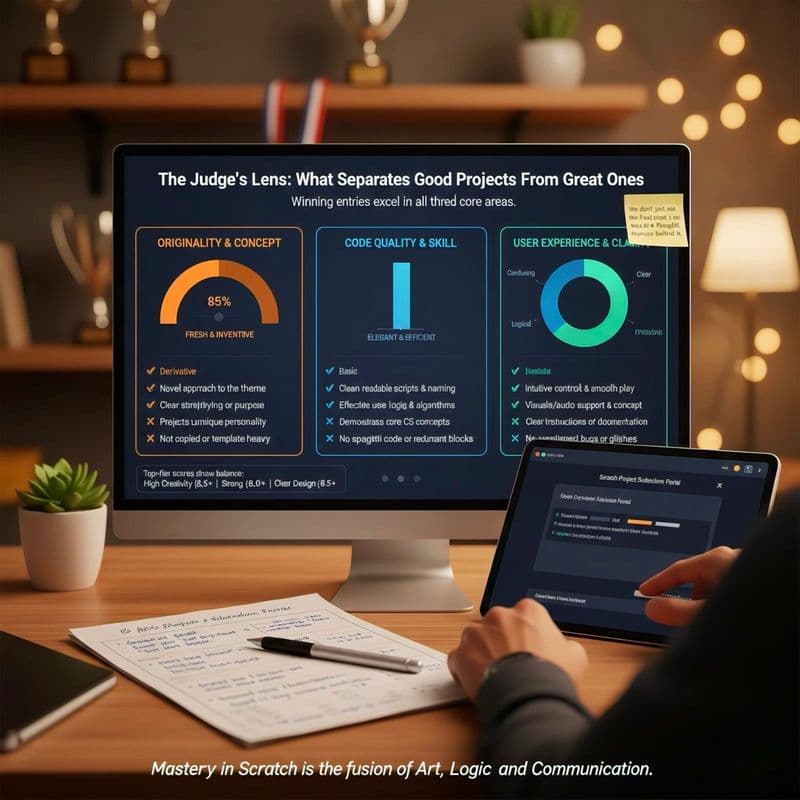
Judges in a Scratch Olympiad or scratch coding competitions focus first on creative ideas. They want students to create original scratch projects that show clear thinking. They can create games, animations, or stories to show their skills. Fresh ideas make all the difference. Projects should suit the age group and show real effort, not copied work.
Strong coding skills matter just as much. Judges evaluate how effectively students use Scratch coding to solve problems. Clean scripts, simple algorithms, and strong sprite control show a grasp of computer science.
Design and explanation complete the picture. Clear visuals, smooth animations, and easy controls make games fun to play. Clear documentation helps judges see how the project works and why decisions were made. In scratch coding contests, students who explain their ideas clearly often win prizes. This helps them confidently join challenges and have fun.
How to Register
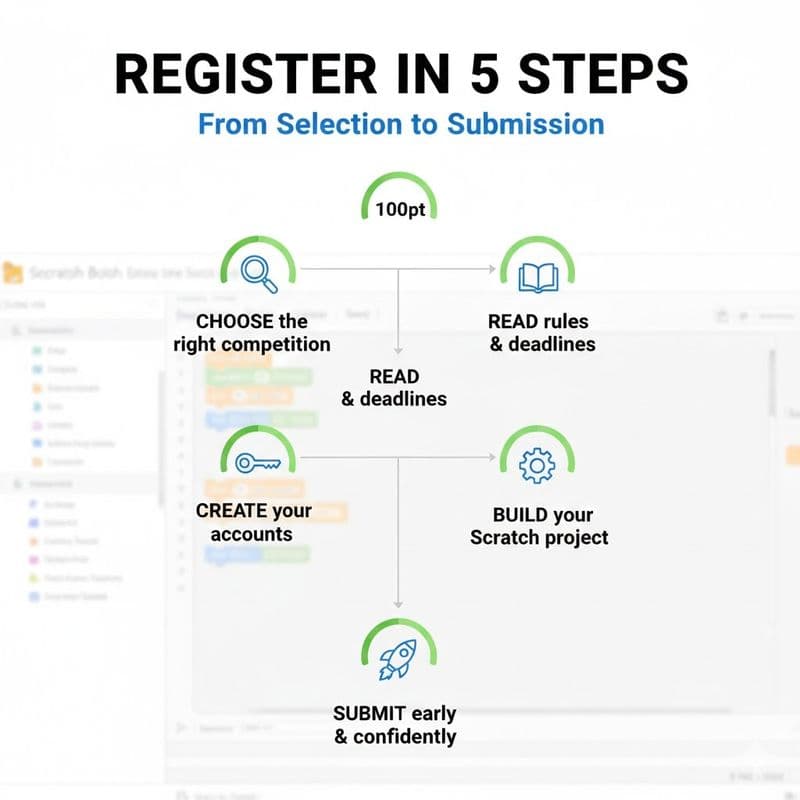
To register for a scratch coding competition:
Choose the competition: Pick a scratch coding contest, like the Scratch Olympiad. Check the age group, skill level, and whether teams allowed or solo entry suits your child. Many national contests and international Olympiad events include categories for making games and animations.
Read rules and eligibility : Review themes, deadlines, and participation rules carefully. Coding competitions test creativity and coding skills. So, knowing the requirements helps students avoid mistakes. Parents often support kids during this step.
Create required accounts : Set up a Scratch account and any competition platform login. This gives students online access to submit projects and manage participation in global coding challenges.
Build the scratch project: Make a solid Scratch project. Use basic programming concepts, simple algorithms, and clear controls. Projects can involve games, animations, or interactive ideas. These should demonstrate knowledge of computer science and information technology.
Prepare and submit early: Upload the project link. Write a brief explanation. Complete all forms before the February deadline. Submitting early helps kids avoid problems. It lets them join in, compete with kids worldwide, and maybe win prizes and awards.
Free vs Paid Competitions
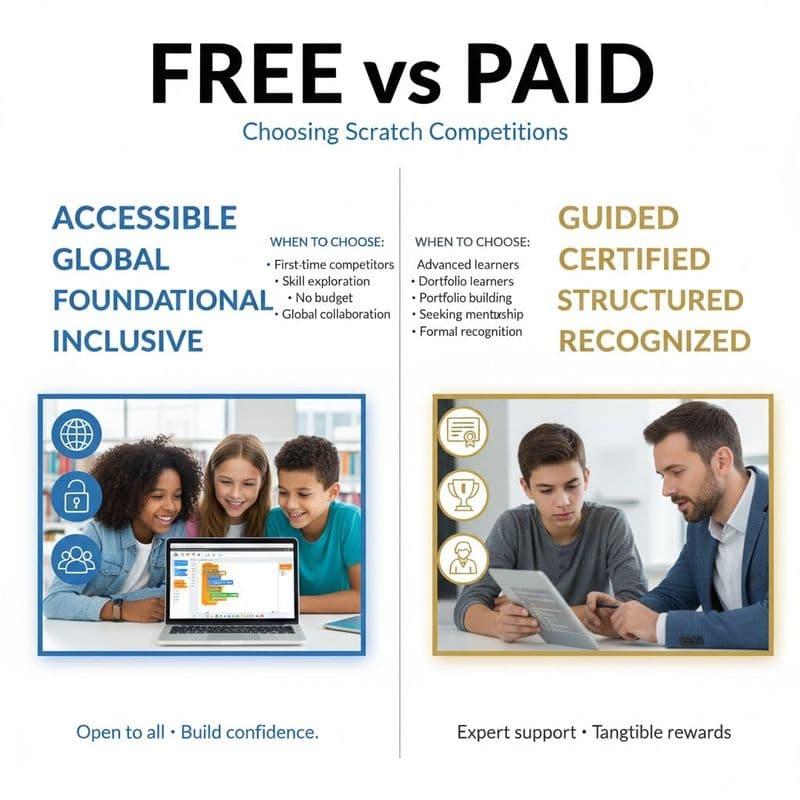
Free scratch coding contests, such as the scratch olympiad, focus on access, learning, and confidence. These coding competitions help kids learn programming, improve coding skills, and understand computer science at no cost. Students from any age group can participate, create a scratch project, and enjoy fun coding challenges with international kids.
Paid coding competitions may add value through certificates, mentorship, feedback, or higher prizes. They suit students who want structured practice and expert support to grow faster. When deciding, parents should look at the child’s interest and progress, not pressure. The right competition, free or paid, helps kids build skills, show creativity, and grow in technology step by step.
Role of Teachers & Parents
In a scratch coding competition or Olympiad, teachers and parents play a vital role in supporting them. They help kids to learn rules. They also pick ideas and create scratch projects that match their age and interests. Parents can support practice and steady progress. This guidance helps students learn programming and improve coding skills with confidence.
The balance matters. Adults should not write code or control the program for the child. Instead, they should ask questions, help debug, and guide kids to solve problems on their own. Celebrating effort, not just prizes, makes coding fun and builds long-term interest. With the right support, kids love coding challenges. They build creative skills and feel proud to join global coding competitions.
Frequently Asked Questions
Can my child join multiple competitions?
Yes, as long as deadlines and time commitments allow it. It's a best way to develop skills.
Are team submissions allowed?
In most coding contests, yes. Check the specific rules. Working in teams teaches collaboration.
How is plagiarism monitored?
Judges use tools and their knowledge to check for copied code. Originality is key. Always write your own program.
What are the time limits?
Some challenges are timed (like 3 hours), while others give weeks or months to build a project.
How long does judging take?
It can take several weeks after the submission deadline, depending on the number of entries.
Life After the Competition
Competitions are a stepping stone, not the finish line. After the event, students can upload their projects to Scratch, GitHub, or to their portfolios.
These achievements become valuable for school admissions and joining advanced STEM clubs. They serve as concrete proof of a student's ability to create and implement complex software. For many, these early contests are the first step toward careers in software engineering.
Competition Calendar 2026
Planning ahead helps a lot. Many competitions follow a yearly schedule. Dates might change, but the general rhythm remains consistent.
February - March: Scratch Olympiad registration often opens.
May - June: Regional qualifying rounds for major national competitions.
August: IKCC annual summer challenges.
October - November: Congressional App Challenge submissions.
Year-Round: Online monthly challenges on platforms like CodeChef.
Mark these dates to ensure your student has ample time to prepare and submit.
Resources & Communities
Kids can learn programming and practice in active communities.
Official Scratch Tutorials: The best place to start for basics.
Reddit r/Scratch: A hub for advanced tricks and feedback.
Facebook Groups: "Teaching with Scratch" communities offer support for parents and educators.
Discord: Real-time chat servers, where young coders share ideas.
YouTube: Endless lessons on specific game mechanics and algorithms.
These resources offer guidance, troubleshooting, and inspiration when students get stuck.
Conclusion
Coding competitions help kids build creativity, logic buildingskills. Through scratch coding, students learn a simple programming language, solve problems, and turn ideas into working scratch projects. These coding contests support different age group levels and various categories, making them useful for beginners and growing coders alike.
Whether a child joins a scratch olympiad, national competitions, or an international olympiad, the experience matters more than prizes. Kids learn computer science, gain confidence, and become creators of games and animations.
Comments
Your comment has been submitted