What is an AI Coding Summer Camp
What is an AI Coding Summer Camp?
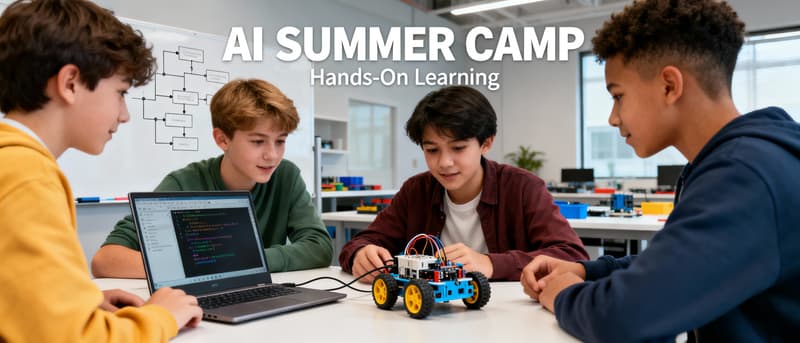
An AI summer camp is a short program where kids learn new skills like Artificial Intelligence, Coding, Python and Data Science through hands-on projects. Students practice core Machine Learning ideas like simple neural networks, basic models, and systems that react to data, focusing on artificial intelligence and machine concepts. They also see real world use cases, including voice assistants and self driving cars.
Unlike general computer science camps, an AI camp focuses on practical tasks. Students learn how systems sort data, find patterns, and support everyday work. The goal is not to make kids experts but to give them a solid foundation and useful skills for real world projects.
These summer camps are open to mid and high school students, even without prior coding experience. With support from an instructor, students explore python programming, test small models, and build simple projects they can explain. It is a strong learning option for kids interested in tech, future innovators, or anyone who wants to learn AI and apply artificial intelligence through clear steps and hands-on work.
Why Choose an AI Coding Summer Camp for Kids?
Parents choose an AI coding summer camp when they want more than simple game lessons. These programs mix game development and projects with core skills like problem solving, analytical thinking, and critical thinking. Kids learn to break real world problems into simple steps, pick useful data, and test ideas until a model works.
AI camps also build confidence. When students create a project that sorts images or answers questions, they see that Artificial Intelligence is a tool they can understand and use. Many high school students say these camps helped them explore paths in Artificial Intelligence, Engineering, and careers in Data Science because they are gaining skills through early, hands-on experience.
What Kids Learn in AI Summer Programs
AI summer programs teach fundamentals of AI and data science. Students learn how a machine learning model works and why training data matters. They learn how computers recognize patterns related to intelligence and machine learning. They explore real world applications so they understand how AI solves problems in daily life. Kids also learn python, coding logic, simple algorithms, and teamwork.
By the end of the program, students can use their new skills in school assignments, personal projects, and early career exploration. Lessons move at a simple pace, guiding beginners so they do not need any coding background.
AI Summer Camp Curriculum & Topics
A strong curriculum balances knowledge with fun. An AI coding camp includes the following:
Intro to Artificial Intelligence
Students learn what AI means and how machines use data to make decisions. This gives them a basic starting point for understanding the field.
Python Programming for beginners
Students learn Python through short, easy exercises. This helps them build the skills they need to create simple programs.
Hands-on projects with Machine Learning
Students train small models that can sort images or sounds. They see how their code leads to outcomes based on data.
Working with generative tools
Students explore tools that create text, pictures, or music. This shows how AI can support creative tasks.
Real World Projects
Students build small apps or games, including game development projects, that they can share. These projects help them apply what they learned in a practical way.
Best AI Coding Summer Camps (2025 Guide)
When parents search for the best AI summer camp, they usually look at three things: curriculum quality, experienced instructors, and safety. Strong programs publish clear course outlines, show how many hours are spent on hands-on projects, and share examples of student work in their courses. Some AI programs focus on high school students who already have prior coding experience and others welcome mid school students and complete beginners.
Families should check start dates, class size, and how instructors support students during learning sessions. Camps linked to known computer science brands or universities often have more structured AI research style projects. Smaller, local artificial intelligence camps may offer closer mentorship and a stronger sense of community, where kids meet peers with similar interests.
Python Coding Camp for Beginners
Many AI camps offer a Python coding track. This is because Python is the main language for AI and data science. Python has simple syntax, so students learn loops, functions, and data structures without getting lost in complex code. After learning the basics, they can create small AI projects. These include sentiment checkers, number-guessing games that "learn," and simple recommendation models.
For beginners, the program starts with basic Python in a friendly editor. Then, it moves to libraries that support AI and ML. This path shows students how code turns into working models.
Online vs In-Person AI Summer Camps
Both formats have clear benefits. The best choice for mid-school students depends on your child’s learning style and your schedule.
Online AI camps offer flexibility. Students can learn from home and often access recorded lessons. They still complete hands-on projects and join live sessions with instructors and peers. This works well for kids who focus better in a familiar space.
In-Person coding camps provide a face-to-face setting. Students work together, build group projects, and get direct support from an instructor. This format is helpful for kids who learn well through social interaction and steady structure.
Think about your child’s need for routine, teamwork, and your own travel plans. Both options give students useful experience and strong skill building.
Age Groups: AI Camps for Elementary, Middle & High School
The best AI summer programs adjust lessons to match each student’s age and background.
Elementary school kids:
Students use visual, block-based coding and simple ideas about how machines make decisions. They may build small games, such as a character moving through a maze. The goal is to build early interest and basic understanding during middle school years.
Mid-schoolers:
Students begin using Python. They work on starter machine learning tasks, such as training a model to sort images. These projects strengthen problem solving and introduce more detailed concepts without overwhelming them.
High school students:
Students handle more advanced work. They analyze data sets, design simple software logic, and explore key ideas used in AI and ML. This gives them practical experience that supports future studies in computer science, engineering, or AI research.
Cost & Duration of AI Coding Summer Camps
The cost of an AI coding summer camp depends on the format, location, and level of difficulty. Short online programs often run 1 or 2 weeks with daily sessions of 2 to 3 hours. Longer in-person camps for high school students may last 3 to 6 weeks and follow a full-day schedule.
Most camps include instructers, software access, project reviews, and a completion certificate. Some also offer career guidance in AI and Data science or advice on high school and college paths. Families can look for early bird discounts, sibling pricing, or scholarships to help with cost.
The most important factor is whether the program offers strong hands on experience and clear skills that students can use after the camp ends.
FAQs About AI Coding Summer Camps
What age is best for an AI coding summer camp for kids?
Many camps accept children from upper elementary grades, but mid-school and high school are ideal times. At these ages, students can handle text‑based code, reason about data, and gain knowledge for a deeper understanding of AI and machine learning.
How do coding summer camps for kids differ from school computer classes?
School classes often focus on theory or shared exercises. An AI summer camp uses focused learning sessions and hands on projects where students build games, models, or apps from start to finish. This project‑based work feels more like real engineering.
Is AI safe for kids to learn?
Yes, when programs use age‑appropriate content and clear rules about data privacy and online behaviour. Camps should teach responsible use of AI tools, explain how data is stored, and show results.
Do kids need any coding experience before joining an AI camp?
Some artificial intelligence camps are built for complete beginners, while others expect prior experience with Python or block coding. Parents should check the curriculum and talk to instructors about the right level for their child's interest and skills.
What types of projects do kids build in an AI camp?
Students build projects such as chatbots, image classifiers, simple game AI, and small recommendation systems. High schoolers may also work on projects linked to AI research topics or real world problems, which can dive into a deeper understanding and valuable experience for college applications.
How much time do AI summer programs usually take?
Most camps run between 1 to 6 weeks. Short camps give a fast introduction to AI concepts, while longer programs allow students to dive into data, design a machine learning model, and refine it through testing and feedback.
Comments
Your comment has been submitted